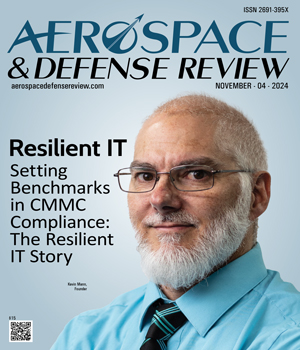
Resilient IT: Setting Benchmarks in CMMC Compliance: The Resilient IT Story ---> CMMC

CMMC Compliance of The Year - 2024

In 2024, the landscape of U.S. defense services is rapidly evolving, driven by two critical areas—the Cybersecurity Maturity Model Certification (CMMC) and U.S. Government SATCOM (satellite communications) and IT Field Support Services.

Compliance becomes essential for organizations handling sensitive government information with the final CMMC rule published in October 2024. Starting in December, defense service providers must align with phased certification levels, ensuring their cybersecurity practices meet stringent requirements before securing contracts. The CMMC framework enhances security while offering a competitive edge to companies prioritizing safeguarding federal data. Prime contractors are already pushing forward, integrating the Defense Federal Acquisition Regulation Supplement (DFARS) 7021 clause into agreements ahead of schedule, adding pressure on subcontractors to stay compliant.

Simultaneously, the U.S. Government’s SATCOM and IT field support services are transforming, fueled by increasing investments in military communications satellites and growing partnerships with commercial providers like Intelsat. This shift toward managed services enables more agile, reliable satellite communications, especially in crisis situations where terrestrial networks are at risk.

CMMC compliance is vital to unlocking new opportunities for providers in this space. These companies can ensure secure communication channels for critical operations by meeting cybersecurity standards, setting them apart in a highly competitive market while contributing to the U.S. military’s communication resilience. Together, these trends shape a future where robust cybersecurity and cutting-edge satellite technology are inseparable from defense operations.

This edition delves into how the U.S. is enhancing its SATCOM initiatives while complying with CMMC to ensure the defense is secure from the growing threats. The magazine also features insights from expert CXOs like Gabrielle Carlisle, Vice President of Manufacturing, Supply Chain and Logistics, Millennium Space Systems and Mark O. Hatfield, Assistant Director and Chief Security Officer, Miami International Airport, offering their opinions on the currently used business practices. We hope these valuable insights from industry leaders, as well as solutions and services from trading firms featured in this edition, will assist you in making informed decisions for your businesses.
    CMMC Compliance of The Year

    Resilient IT specializes in CMMC compliance and managed IT services for Defense Contractors. The company provides expert guidance and tailored solutions to help organizations navigate complex regulations, ensuring readiness and confidence for successful assessments and ongoing compliance. ... read full profile

A&D Security Info

Q1
What Do Top A&D Security Companies Do?
Top A&D Security Companies help protect aerospace, defense and national security environments from physical, cyber and intelligence-related threats. Their work can include cybersecurity, secure communications, identity management, surveillance systems, threat detection, access control, mission assurance and protection of critical infrastructure. In aerospace and defense settings, security often extends far beyond traditional IT. A security gap can affect aircraft systems, defense networks, satellite operations or classified programs. Many organizations rely on Top A&D Security Companies to strengthen protection across both digital and physical environments while meeting strict government and industry requirements.
Q2
Why Do Top A&D Security Companies Matter More Today?
Demand for Top A&D Security Companies has grown as aerospace and defense organizations face more sophisticated cyberattacks, drone threats, supply-chain risks and geopolitical pressures. Defense agencies, contractors and aerospace manufacturers now manage highly connected systems that generate and exchange large amounts of sensitive data. A weak supplier, unsecured software update or overlooked network vulnerability can create serious exposure. At the same time, governments are placing greater emphasis on cybersecurity standards, software integrity and infrastructure protection. Security has become part of everyday program delivery rather than a separate compliance exercise.
Q3
How Should Organizations Evaluate Security Providers in Aerospace and Defense?
Organizations should look beyond product features and examine how a provider performs in real defense and aerospace environments. Security systems often need to integrate with existing platforms, classified networks, aircraft systems, manufacturing facilities and command infrastructures. Buyers should ask how incident response works, how compliance requirements are handled and whether the provider has experience with regulated defense programs. A useful test is to review how a vendor manages a realistic security event, such as a compromised supplier connection or a suspicious network intrusion. Documentation quality matters. Small gaps in security controls can become larger problems during audits or mission-critical operations.
Q4
What Business Value Do Top A&D Security Companies Deliver?
The value goes well beyond preventing attacks. Top A&D Security Companies help organizations reduce operational disruptions, protect intellectual property, safeguard defense technologies and maintain customer trust. Aerospace and defense projects often involve long development cycles, sensitive engineering data and multiple contractor relationships. A breach can delay programs, increase compliance costs and create reputational damage that lasts for years. Strong security practices also support faster procurement approvals and smoother collaboration across government and commercial partners. In many cases, security investments help organizations avoid costly disruptions before they occur.
Q5
How Are Technology and Innovation Shaping the A&D Security Market?
Security providers are increasingly using artificial intelligence, behavioral analytics, advanced threat intelligence and automated monitoring tools to identify risks faster. The growing use of unmanned systems, connected defense platforms and satellite networks has expanded the attack surface across the aerospace and defense sector. Security teams are also paying closer attention to software supply chains and system resilience. Many organizations now expect providers to deliver continuous monitoring, threat visibility and rapid response capabilities rather than periodic security reviews. Most teams already have reporting tools. The challenge is turning large volumes of security data into practical decisions that can be acted on quickly.
Q6
What Should Decision-Makers Prioritize When Comparing Top A&D Security Companies?
When comparing Top A&D Security Companies, decision-makers should focus on proven sector experience, regulatory understanding, integration capability, support responsiveness and long-term reliability. Security programs often remain in place for many years, which makes service continuity important. Organizations should also review how providers handle evolving threats, software updates and security validation. The strongest option is not always the one with the longest feature list. A provider that understands defense workflows, classified environments and mission requirements is often a better fit. Security failures rarely stay isolated. One overlooked vulnerability can affect suppliers, contractors and critical programs across the wider ecosystem.